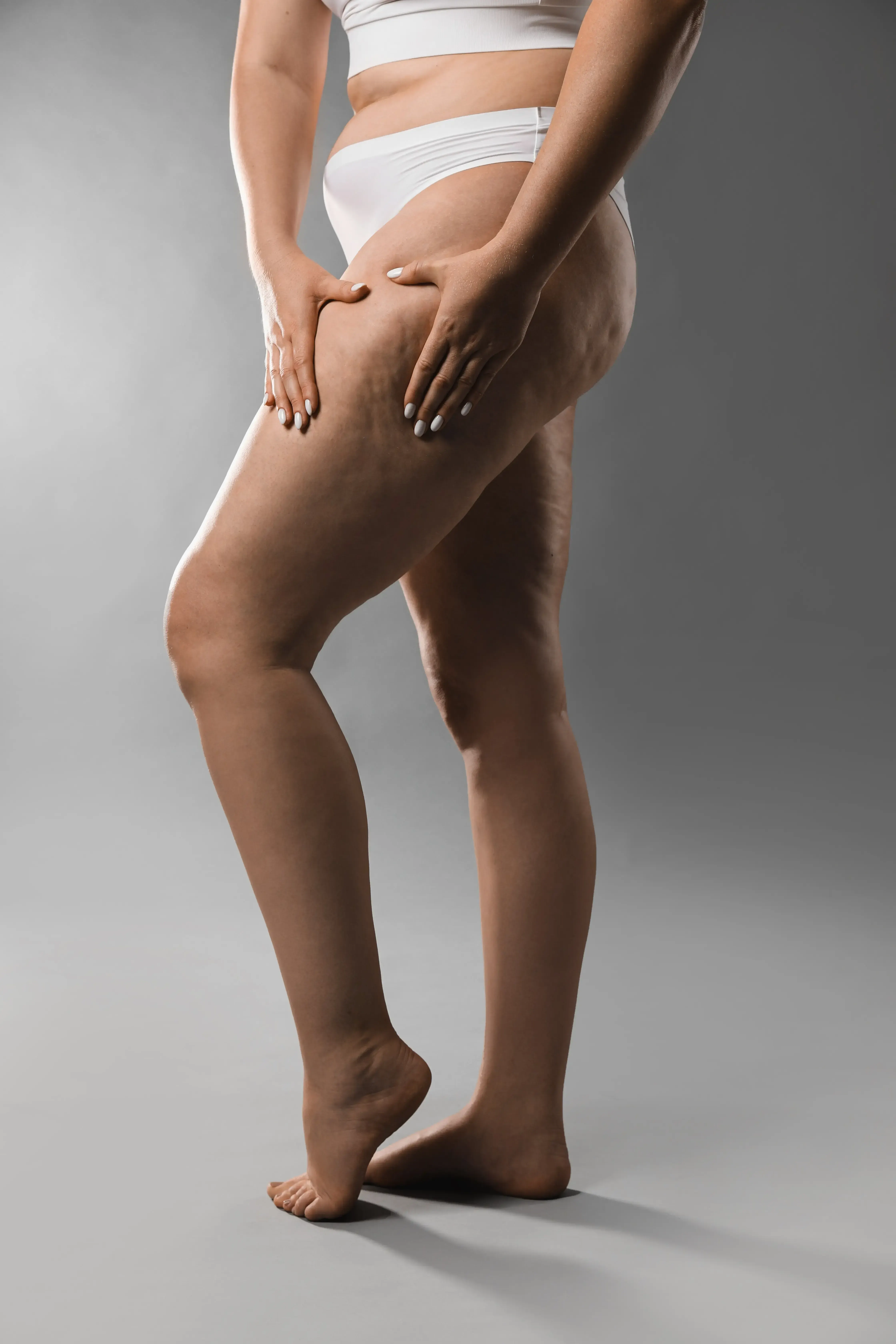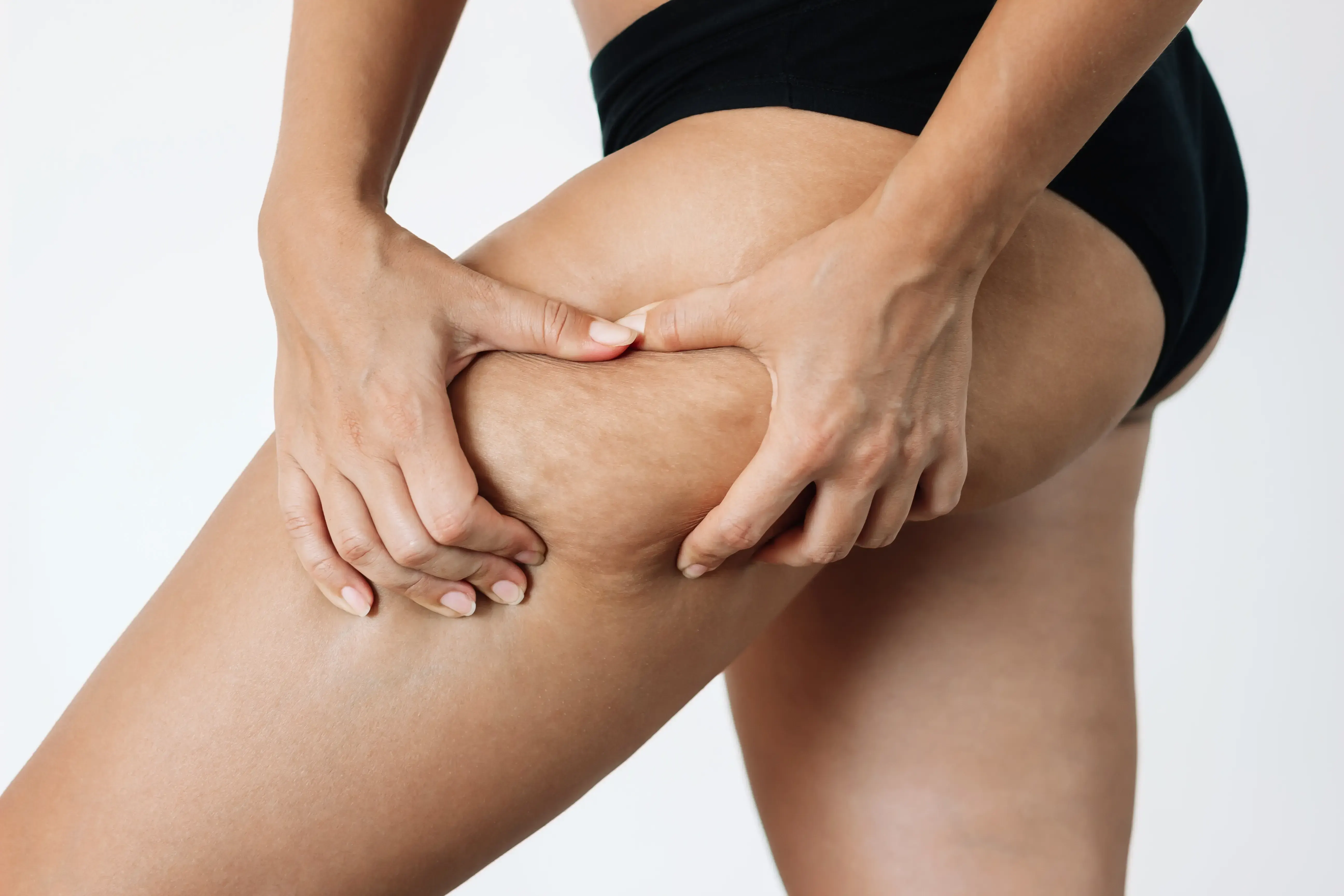
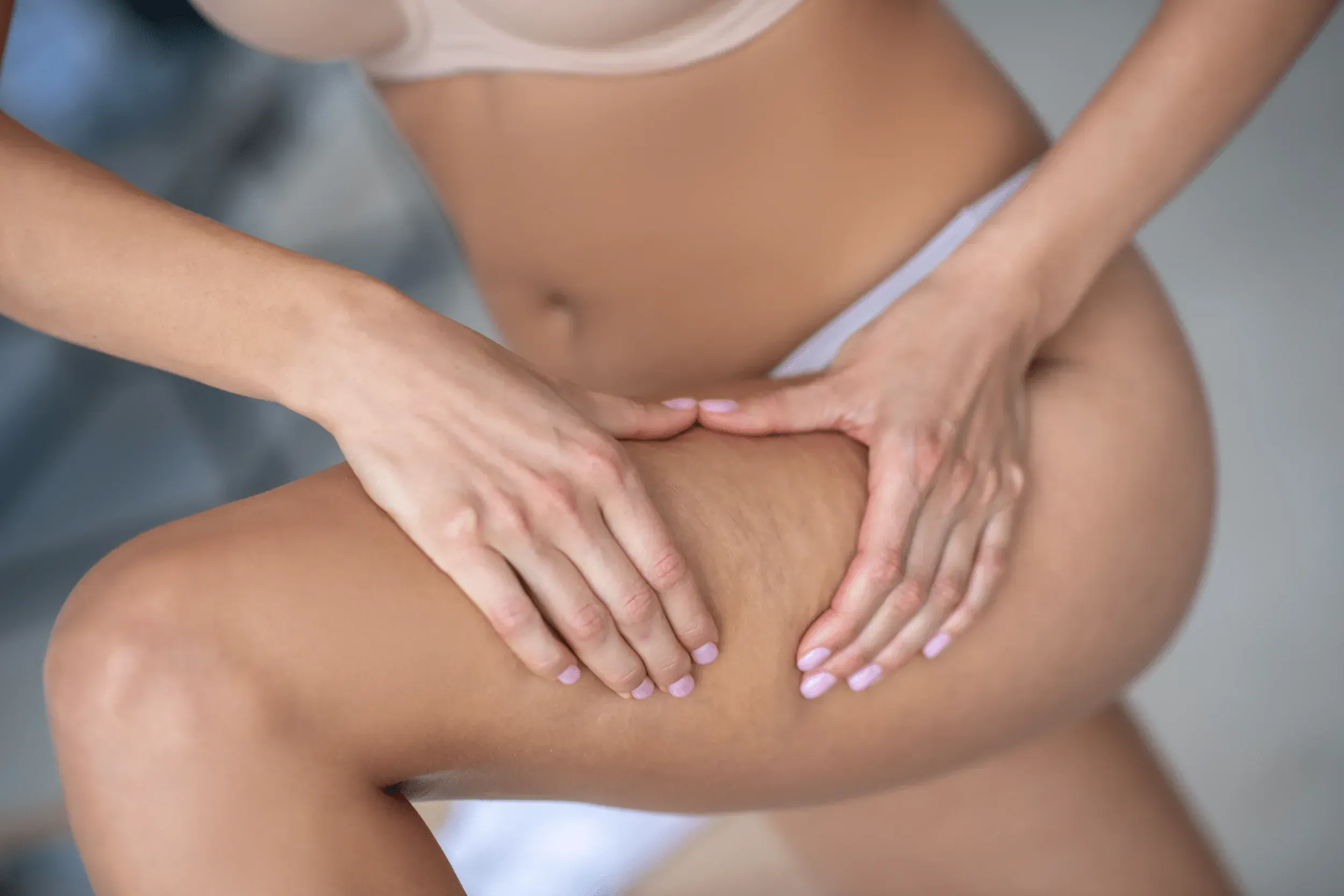
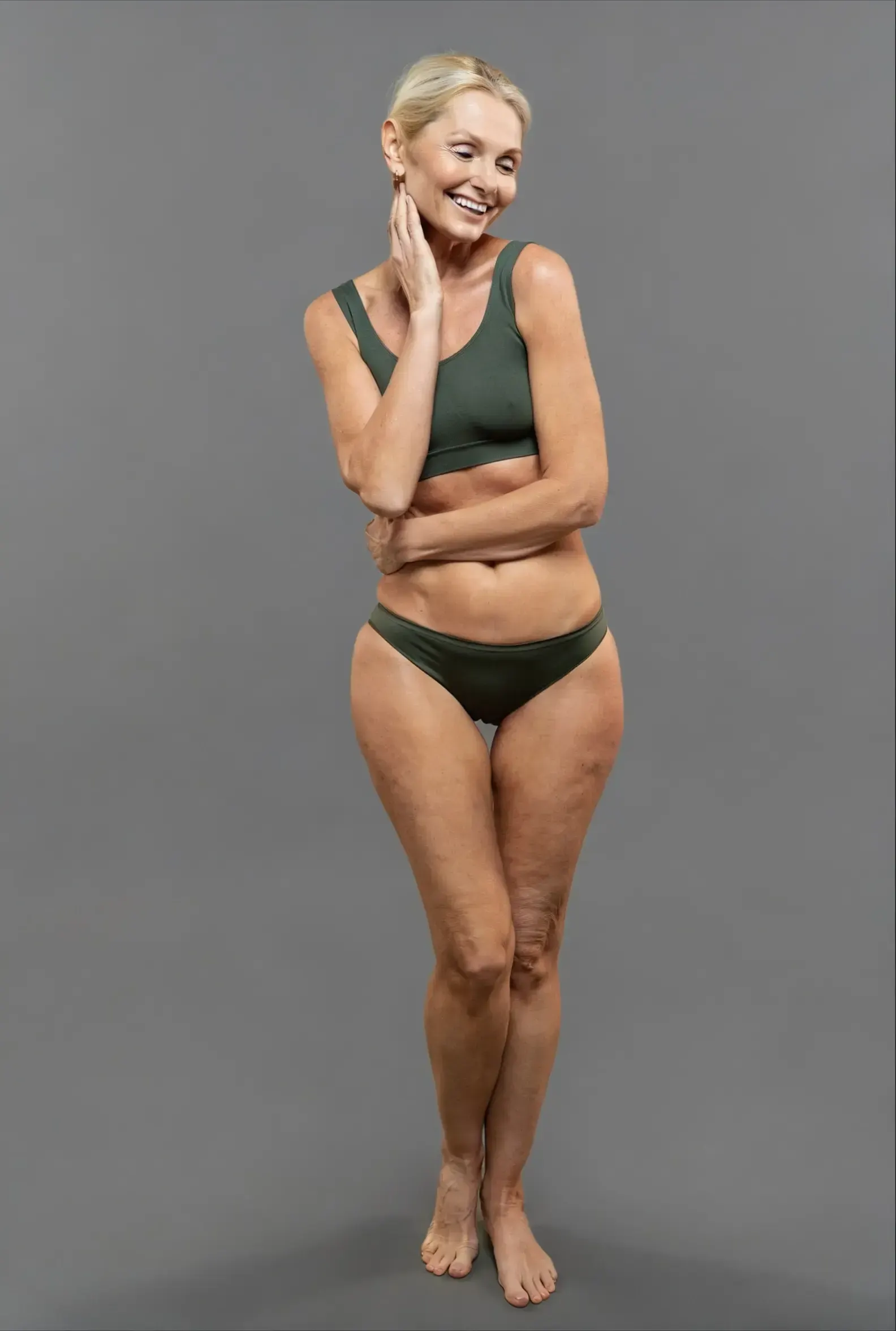
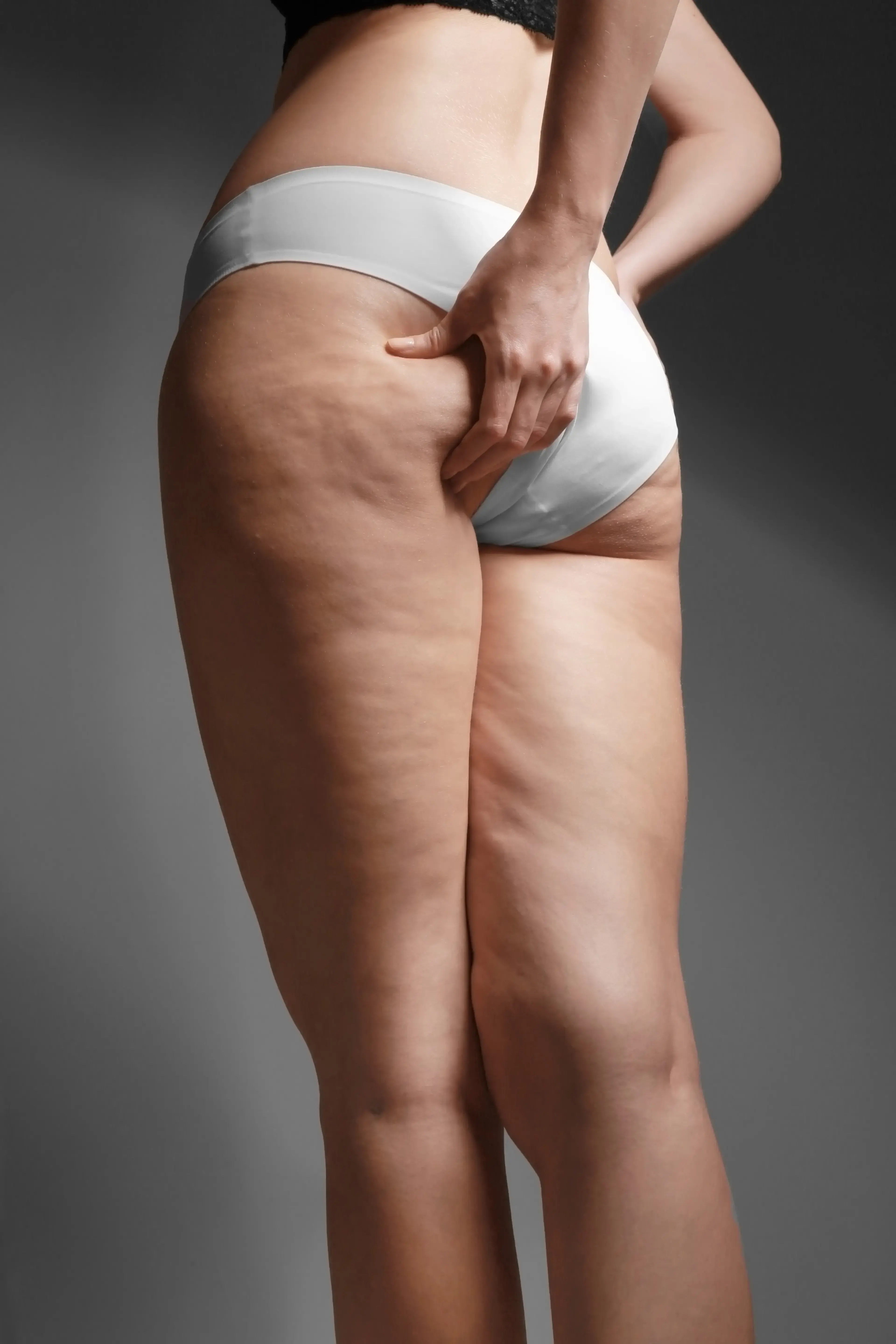
Beneath your skin, vertical fibrous cords called septae anchor the dermis to deeper tissues. Between these cords sit chambers of subcutaneous fat. When septae thicken and shorten, and when fat chambers enlarge, the surface of the skin is pulled inward in some areas and pushed outward in others, producing the classic dimpled appearance of cellulite.
This structural pattern is heavily influenced by sex hormones. Estrogen drives a vertical, columnar arrangement of septae in women, which is why cellulite is far more common in women than men. According to the National Center for Biotechnology Information, the histological architecture of female subcutaneous tissue makes herniation of fat through the dermis significantly more likely.
Decreased blood flow and lymphatic drainage compound the problem. When circulation slows, fluid accumulates between fat chambers, inflammation increases, and collagen production declines. The result is loss of skin elasticity, weaker dermal support, and progressively more visible dimpling over time, even at a stable, healthy weight.