



Confident woman exercising at Heritage Wellness & Med Spa Crescent Springs

Pelvic Floor Weakness Treatment in Crescent Springs, KY

Reclaim Strength, Comfort, and Confidence

Common In:Adults 30+
Primary Causes:Childbirth, Aging, Surgery
Treatment Time:28 minutes
Results:After 6 sessions
Educational illustration of pelvic floor anatomy at Heritage Wellness & Med Spa

Pelvic Floor Weakness in Crescent Springs, KY: Signs, Causes and Non-Invasive Treatments

Recognizing the Signs

Pelvic floor weakness refers to a reduction in the strength, tone, and coordination of the muscles that support the bladder, uterus, and bowel. These muscles form a hammock at the base of the pelvis, and when they weaken, daily activities like coughing, lifting, or exercising can trigger symptoms many patients quietly tolerate for years.

When you feel heaviness in the pelvis, leak with a sneeze, or notice changes in intimate sensation, you are observing real signs of pelvic floor dysfunction. This is a common, treatable condition, not a normal consequence of aging or motherhood that you simply have to accept.

Many patients describe feeling self-conscious, frustrated, or isolated by these symptoms. The good news: a non-invasive pelvic floor treatment near me search now leads to FDA-cleared technology like Emsella that strengthens these muscles without surgery, downtime, or even disrobing.

Diagram of pelvic floor muscles and supportive structures at Heritage Wellness & Med Spa Crescent Springs

Why Pelvic Floor Weakness Happens

Understanding the Root Causes

The pelvic floor is a coordinated network of muscles, ligaments, and connective tissue that supports your pelvic organs and controls continence. According to the National Institute of Diabetes and Digestive and Kidney Diseases, these muscles can weaken from pregnancy, vaginal delivery, age-related collagen loss, and chronic intra-abdominal pressure, often beginning years before symptoms surface.

When the pelvic floor loses tone, the bladder neck, urethra, and pelvic organs lose their stable support. This cascade leads to stress incontinence, urgency, pelvic heaviness, and reduced sexual sensation. A targeted pelvic floor therapy near me can restore that support without surgery.

Hormonal shifts, particularly the estrogen decline of perimenopause and menopause, further reduce tissue elasticity and muscle mass. Combined with sedentary habits or repetitive high-impact loading, the floor simply cannot keep up. Devices like Pelvic Floor Therapy with Emsella use HIFEM technology to trigger thousands of supramaximal contractions per session, retraining muscles you cannot adequately reach with Kegels alone.

Anatomical illustration of pelvic floor muscle fibers at Heritage Wellness & Med Spa

Muscle Fiber Loss and Connective Tissue Changes

How Aging and Injury Affect Pelvic Strength

The pelvic floor contains both fast-twitch and slow-twitch muscle fibers. Fast-twitch fibers protect against sudden pressure (a cough, a jump), while slow-twitch fibers maintain steady support throughout the day. After childbirth or with age, fast-twitch fibers atrophy first, which is why leaks during exercise often appear before constant heaviness.

Connective tissue around the pelvic organs relies on collagen and elastin for resilience. After 30, collagen production declines roughly 1 percent per year. Combined with stretching during pregnancy or surgical scarring after a hysterectomy, the supportive lattice loses its bounce-back capacity.

The deep core, including the transverse abdominis and diaphragm, works in synergy with the pelvic floor. When core coordination breaks down, the floor compensates poorly. A combined approach with Core and Floor retrains both systems together for more durable results than isolated work.

Lifestyle factors affecting pelvic floor strength at Heritage Wellness & Med Spa Crescent Springs

What Accelerates Pelvic Floor Weakness?

Identifying Your Triggers

01

Pregnancy and Childbirth

Carrying a baby and vaginal delivery stretch and sometimes tear pelvic floor muscles, particularly with larger babies, instrumental delivery, or multiple births.

02

Age-Related Changes

Natural collagen and muscle mass loss after 30 reduces tissue elasticity and resting tone, which compounds with each passing decade.

03

Pelvic or Abdominal Surgery

Hysterectomy, prostatectomy, and other procedures can disrupt nerves, scar tissue, and the supportive structures around the pelvic floor.

04

Chronic Constipation or Straining

Repeated bearing down on the toilet places sustained downward pressure on the pelvic floor, gradually weakening its supportive function.

05

High-Impact Exercise

Running, CrossFit, and heavy lifting without core coordination can overload an already weakened floor and accelerate dysfunction.

06

Hormonal Changes

Estrogen decline during perimenopause and menopause reduces tissue thickness, elasticity, and blood flow to the pelvic region.

Heritage Wellness & Med Spa treatment interior in Crescent Springs Kentucky

Why Choose Heritage Wellness & Med Spa for Pelvic Floor Weakness Care in Crescent Springs, KY

Expert Care in Crescent Springs

  • FDA-Cleared BTL Technology
  • Comprehensive Assessment
  • Discreet, Fully Clothed Treatment
  • Ongoing Outcomes Tracking

Treatment Options Comparison

Finding Your Best Approach

Treatment Best For Session Time Results Timeline Maintenance
Pelvic Floor Therapy with Emsella Targeted pelvic floor strengthening 28 minutes After 6 sessions Every 3-6 months
Core and Floor Pelvic floor plus deep core retraining 60 minutes 4-6 weeks Quarterly tune-up
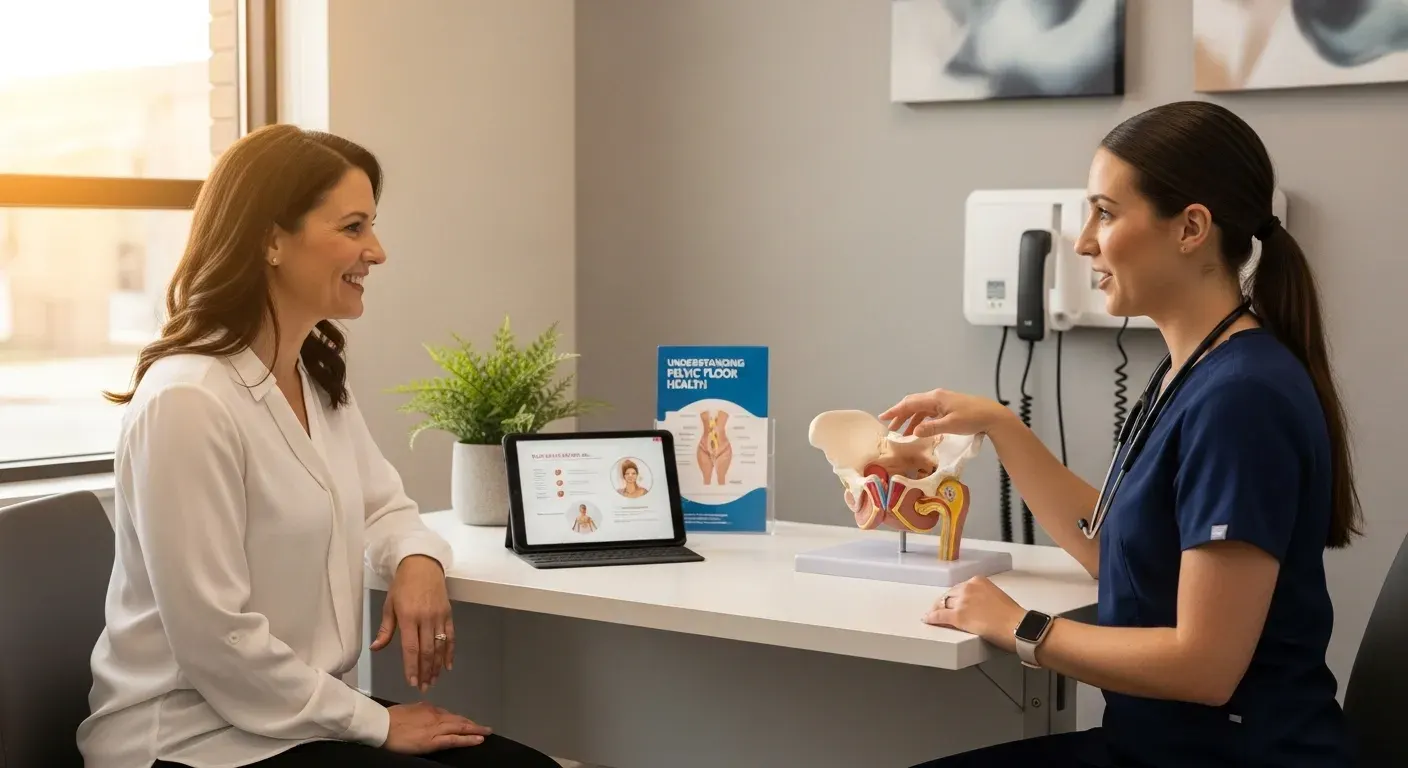
Woman considering pelvic floor treatment options at Heritage Wellness & Med Spa Crescent Springs

You May Be Experiencing Pelvic Floor Weakness If...

Recognizing When to Seek Help

  • Heaviness or Pressure
  • Leaks During Exercise
  • Painful or Less Satisfying Intimacy
  • Persistent Low Back Pain
  • Sexual Wellness Changes
  • Frequent Urgency or Frequency

Frequently Asked Questions

About Pelvic Floor Weakness

01 What are the signs of pelvic floor weakness?

Common signs include leaking urine when you cough, sneeze, jump, or laugh, a feeling of heaviness or pressure in the pelvis, painful intercourse, persistent low back pain, and changes in sexual sensation. Many patients also experience urinary urgency or frequency.

02 What causes pelvic floor weakness?

The most common causes are pregnancy and childbirth, age-related muscle and collagen loss, pelvic or abdominal surgery, chronic constipation, high-impact exercise without core support, and hormonal changes during perimenopause and menopause. Often several factors compound over years.

03 How do you strengthen the pelvic floor?

Daily Kegels help, but most patients cannot adequately isolate or fully contract these muscles. Heritage Wellness & Med Spa offers Pelvic Floor Therapy with Emsella, which uses HIFEM technology to deliver thousands of supramaximal contractions in a 28-minute seated session, restoring strength most patients cannot achieve on their own.

04 Is pelvic floor treatment painful or invasive?

No. Emsella is non-invasive and you stay fully clothed throughout the 28-minute session. You sit on the chair, feel a tingling sensation, and can read or relax during treatment. There is no downtime and you can return to normal activity immediately.

05 How long do results last?

Most patients complete an initial series of six sessions over three weeks and notice meaningful improvement by the final session. Results typically last several months, and many patients return for a maintenance session every three to six months to preserve their gains.

06 Can men benefit from pelvic floor treatment?

Yes. Men experience pelvic floor weakness too, particularly after prostate surgery or with age-related muscle loss. Emsella is FDA-cleared for both men and women and can help with stress incontinence, urgency, and sexual wellness in male patients as well.

Location2325 Buttermilk Crossing
Crescent Springs, KY, 41017

Schedule Your Consultation

Scientific References