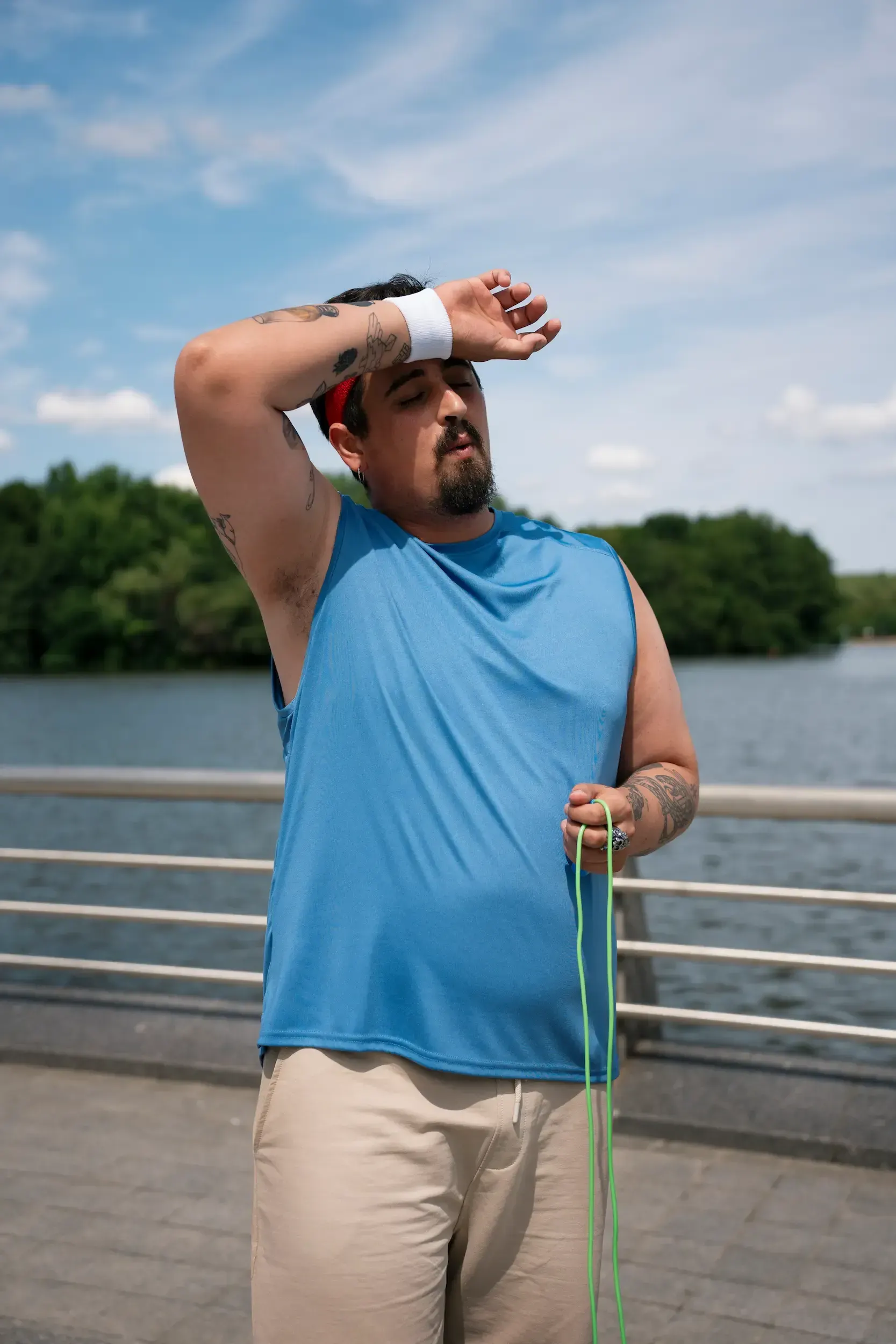
Person addressing excessive sweating concerns at Heritage Wellness & Med Spa Crescent Springs

Excessive Sweating Treatment in Crescent Springs, KY

Reclaim Confidence in Every Setting

Common In:Adults 18-55
Primary Causes:Genetics, Overactive Glands, Stress
Treatment Time:20-40 minutes
Results:2-7 days, lasts 4-6 months
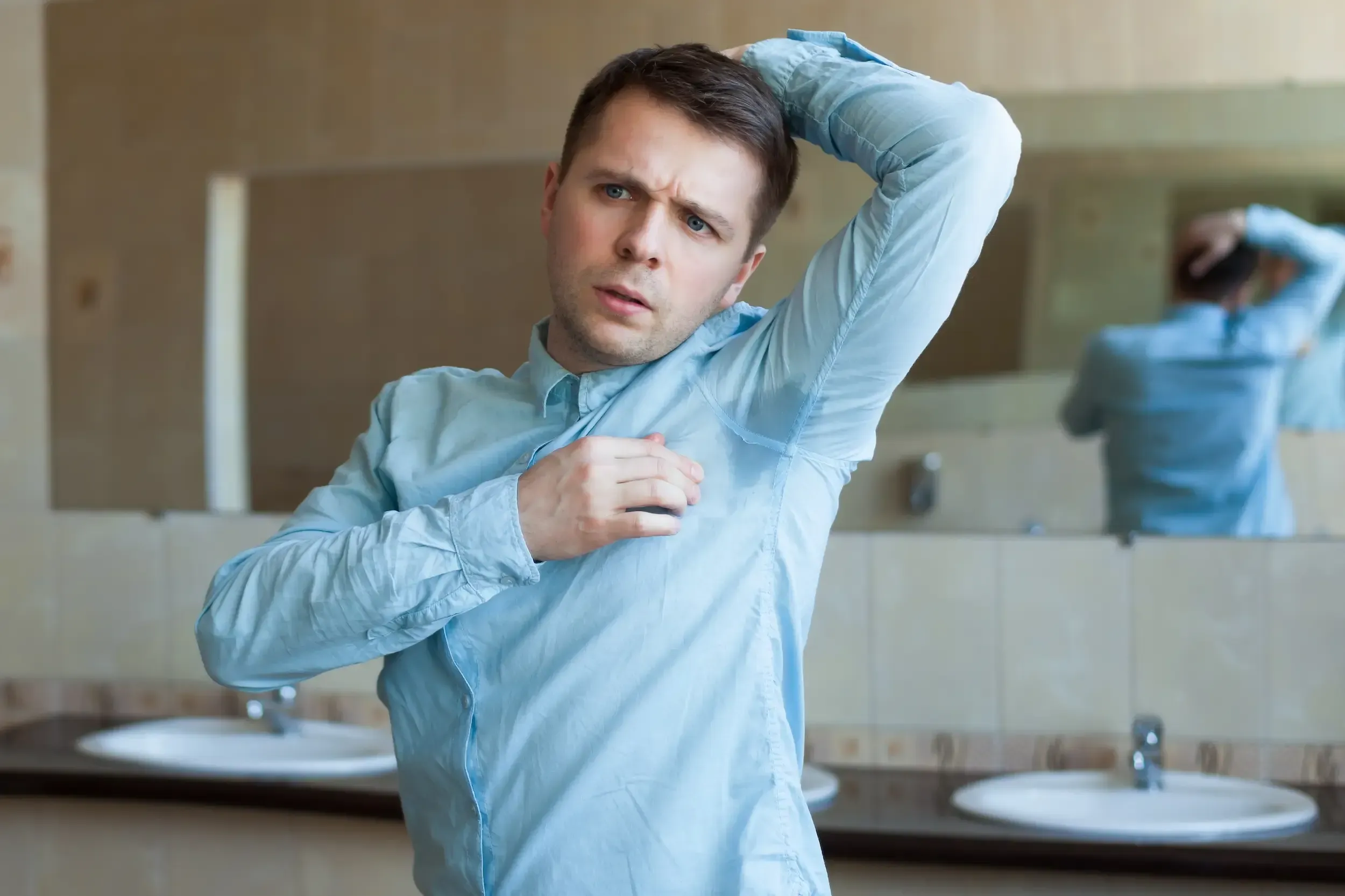
Close-up visual of axillary sweat staining concerns at Heritage Wellness & Med Spa

What Is Excessive Sweating (Hyperhidrosis)?

Recognizing the Signs

Hyperhidrosis is a real medical condition characterized by sweat production that exceeds the body's thermoregulatory needs. It commonly affects the underarms (axillary), palms, soles, and forehead, and the eccrine sweat glands fire even in cool, calm environments.

When you find yourself changing shirts at lunch, gripping a notepad to keep your hands dry before a handshake, or planning your wardrobe around sweat marks, you are experiencing the daily reality of hyperhidrosis. It is not poor hygiene and it is not weakness. It is a neurological signaling issue, and there is effective treatment for it.

Many patients describe feeling "trapped" by their sweating, avoiding public speaking, dating, intimate moments, or certain fabrics altogether. The emotional toll is often heavier than the physical symptom, and you are far from alone in feeling that way.

Illustration of sympathetic nervous system and sweat gland activity at Heritage Wellness & Med Spa Crescent Springs

Why Excessive Sweating Happens

Understanding the Root Causes

Sweating is regulated by the sympathetic nervous system, which signals the body's roughly 2 to 4 million eccrine sweat glands to release fluid that cools the skin. In primary focal hyperhidrosis, those nerve signals fire excessively, even when the body does not need cooling. Research summarized by the National Institutes of Health identifies a strong genetic component, with up to two-thirds of patients reporting a family history.

Secondary hyperhidrosis is different. It happens when sweating is triggered by another underlying condition such as thyroid imbalance, hormonal changes, certain medications, infections, or metabolic disorders. If your sweating started suddenly in adulthood, occurs at night, or affects your entire body, your primary care physician should evaluate you first to rule out an underlying medical cause.

Stress and anxiety amplify both forms by activating the sympathetic nervous system further. The result is a feedback loop: you sweat, you worry about sweating, and the worry triggers more sweating.
Diagram showing botulinum toxin blocking acetylcholine at sweat glands at Heritage Wellness & Med Spa

How Botulinum Toxin Calms Sweat Glands

Targeting the Nerve-to-Gland Signal

Eccrine sweat glands are activated when the neurotransmitter acetylcholine is released from sympathetic nerve endings onto receptors at the gland. This is the chemical handshake that tells the gland to produce sweat. When that signaling is overactive, sweating becomes disproportionate to actual body temperature.

Botulinum toxin type A, the active ingredient in Botox and Xeomin, temporarily blocks the release of acetylcholine at the nerve-gland junction. The signal stops, the gland goes quiet, and sweat production drops dramatically in the treated area for 4 to 6 months on average.

This is the same mechanism FDA-approved for primary axillary hyperhidrosis since 2004 in adults whose sweating has not been controlled by topical agents. The treatment is precise, localized to the area injected, and does not affect sweating elsewhere on the body, so your overall thermoregulation stays intact.

Lifestyle and medical factors affecting excessive sweating at Heritage Wellness & Med Spa Crescent Springs

What Accelerates Excessive Sweating?

Identifying Your Triggers

01

Primary Focal Hyperhidrosis

A genetic, idiopathic form that typically begins in childhood or adolescence and targets specific areas like the underarms, palms, or soles.

02

Secondary Causes

Thyroid disorders, certain antidepressants, hormonal shifts, diabetes, and infections can trigger generalized sweating that needs PCP evaluation first.

03

Overactive Eccrine Glands

Even with normal gland numbers, hyperactive sympathetic nerve signaling causes glands to fire well beyond what cooling actually requires.

04

Anxiety and Stress

Emotional triggers activate the sympathetic nervous system, which amplifies sweating and creates a self-reinforcing cycle of worry.

05

Hormonal Fluctuations

Perimenopause, menopause, pregnancy, and thyroid changes shift sweat patterns and can unmask or worsen existing hyperhidrosis.

Heritage Wellness & Med Spa clinic interior in Crescent Springs Kentucky

Why Choose Heritage Wellness & Med Spa for Excessive Sweating Care in Crescent Springs, KY

Expert Care in Crescent Springs

  • Comprehensive Assessment
  • Precision Injection Technique
  • Discreet, Comfortable Care
  • Honest Guidance on Causes

Treatment Options Comparison

Finding Your Best Approach

Treatment Best For Session Time Results Timeline Maintenance
Botox FDA-approved axillary hyperhidrosis 30-40 min 2-7 days Every 4-6 months
Xeomin Off-label alternative for sweating 30-40 min 3-7 days Every 4-6 months
Person concerned about excessive sweating at Heritage Wellness & Med Spa Crescent Springs

You May Be Experiencing Excessive Sweating If...

Recognizing When to Seek Help

  • Underarm Staining
  • Sweating Without Heat
  • Wet Palms and Soles
  • Sweating During Sleep
  • Social Avoidance
  • Family History

Frequently Asked Questions

About Excessive Sweating

01 What causes excessive sweating?

Primary focal hyperhidrosis is a genetic condition where sympathetic nerves overstimulate eccrine sweat glands. Secondary hyperhidrosis is triggered by thyroid issues, medications, hormonal shifts, or other medical conditions, which is why we recommend a PCP evaluation if your sweating started suddenly or affects your whole body.

02 What is hyperhidrosis?

Hyperhidrosis is a recognized medical condition where the body produces sweat far beyond what is needed to regulate temperature. It typically affects the underarms, palms, soles, or forehead and can occur at rest, in cool rooms, or even during sleep.

03 Can Botox help with excessive sweating?

Yes. Botox is FDA-approved for primary axillary hyperhidrosis in adults whose sweating has not been controlled by topical agents. It blocks the nerve signal that activates sweat glands in the treated area, and most patients see a dramatic reduction in sweating within 2 to 7 days.

04 How long does treatment last?

Most patients enjoy 4 to 6 months of relief from a single underarm treatment, though some experience effects up to 7 months. Maintenance injections, typically twice a year, keep results consistent over time.

05 Will treatment stop me from sweating everywhere else?

No. Botulinum toxin is highly localized. Treating your underarms does not affect sweating on your back, chest, or other areas, so your body still regulates temperature normally during exercise or warm weather.

06 When should I see a professional about excessive sweating?

If sweating disrupts your work, relationships, or daily wardrobe choices, it is time to be evaluated. If sweating is new, generalized, or paired with weight loss or fever, please see your primary care physician first to rule out an underlying medical cause.

Location2325 Buttermilk Crossing
Crescent Springs, KY, 41017

Schedule Your Consultation

Scientific References