

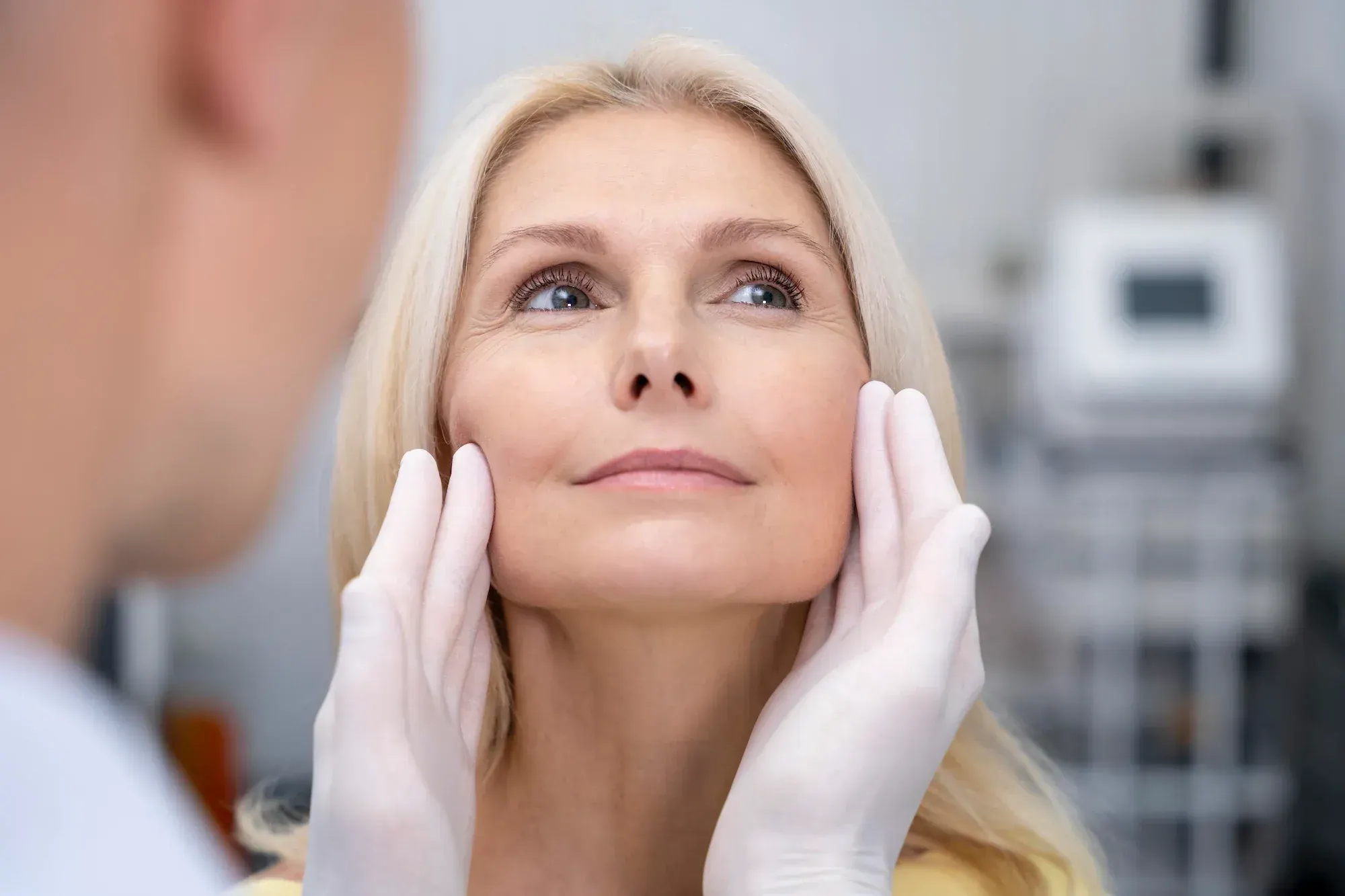

Healthy upper-face skin relies on a balance between strong dermal collagen, elastic fibers, and the rhythmic contraction of expression muscles. Each smile, concentrated stare, or raised brow folds the skin in the same place, and the dermis bounces back. The American Academy of Dermatology notes that repeated facial expressions over time contribute to the formation of wrinkles, gradually turning dynamic lines into more permanent creases.
Around age 25, dermal collagen production drops by roughly 1 percent per year, and elastin fibers fragment under cumulative UV exposure. The frontalis and glabellar muscles continue to contract with the same force, but the skin above them loses the structural support needed to spring back. The result is the horizontal forehead bands and vertical "11s" so many patients ask us how to address. Targeted neurotoxin treatment with Botox or Xeomin relaxes those overactive muscles so the overlying skin can rest and recover.
Compounding the problem, sun damage, smoking, and chronic squinting accelerate dermal thinning and slow fibroblast activity. As the skin's scaffolding weakens, even gentle expressions leave deeper imprints, and the forehead surface increasingly reflects years of habitual movement instead of how you actually feel today.