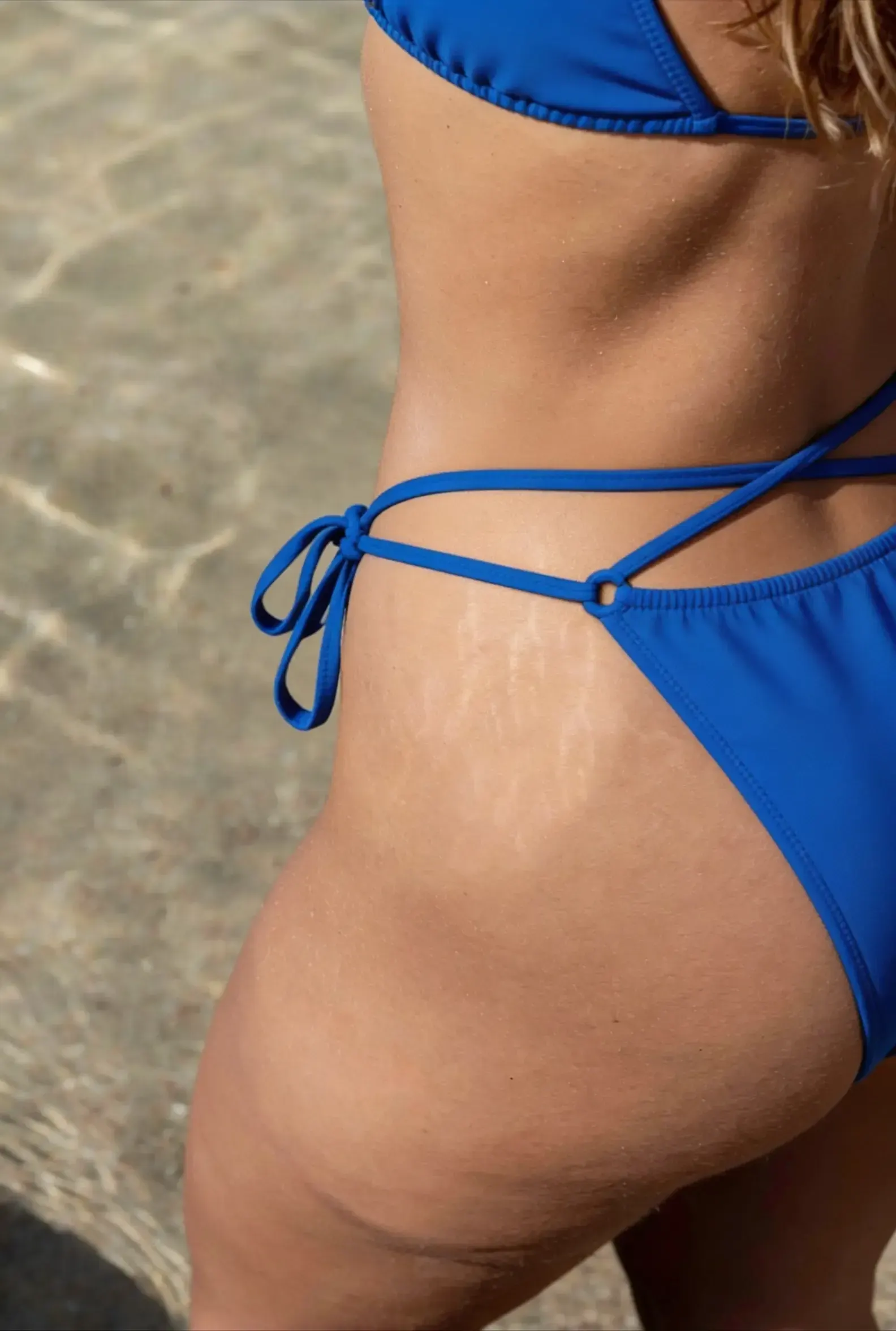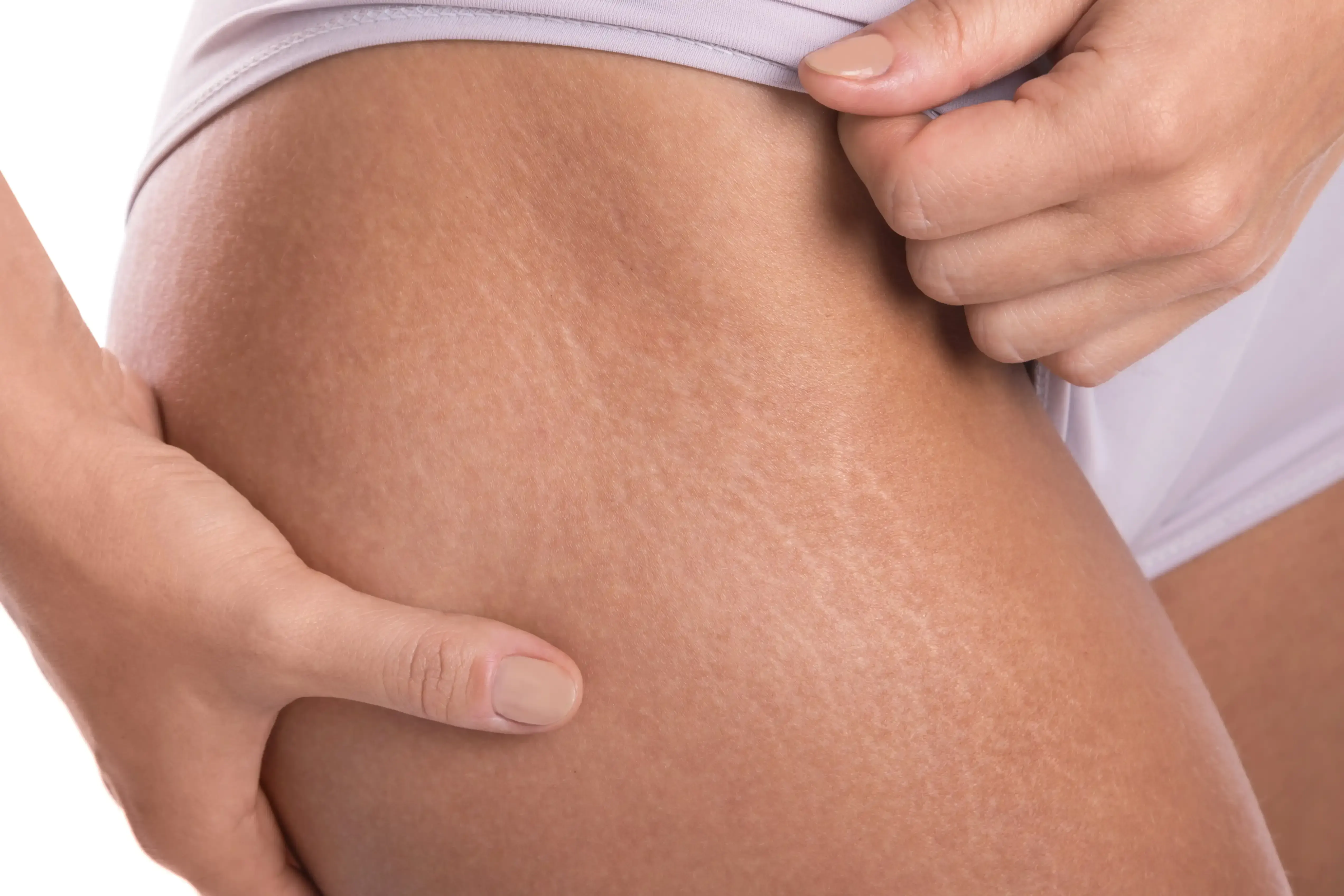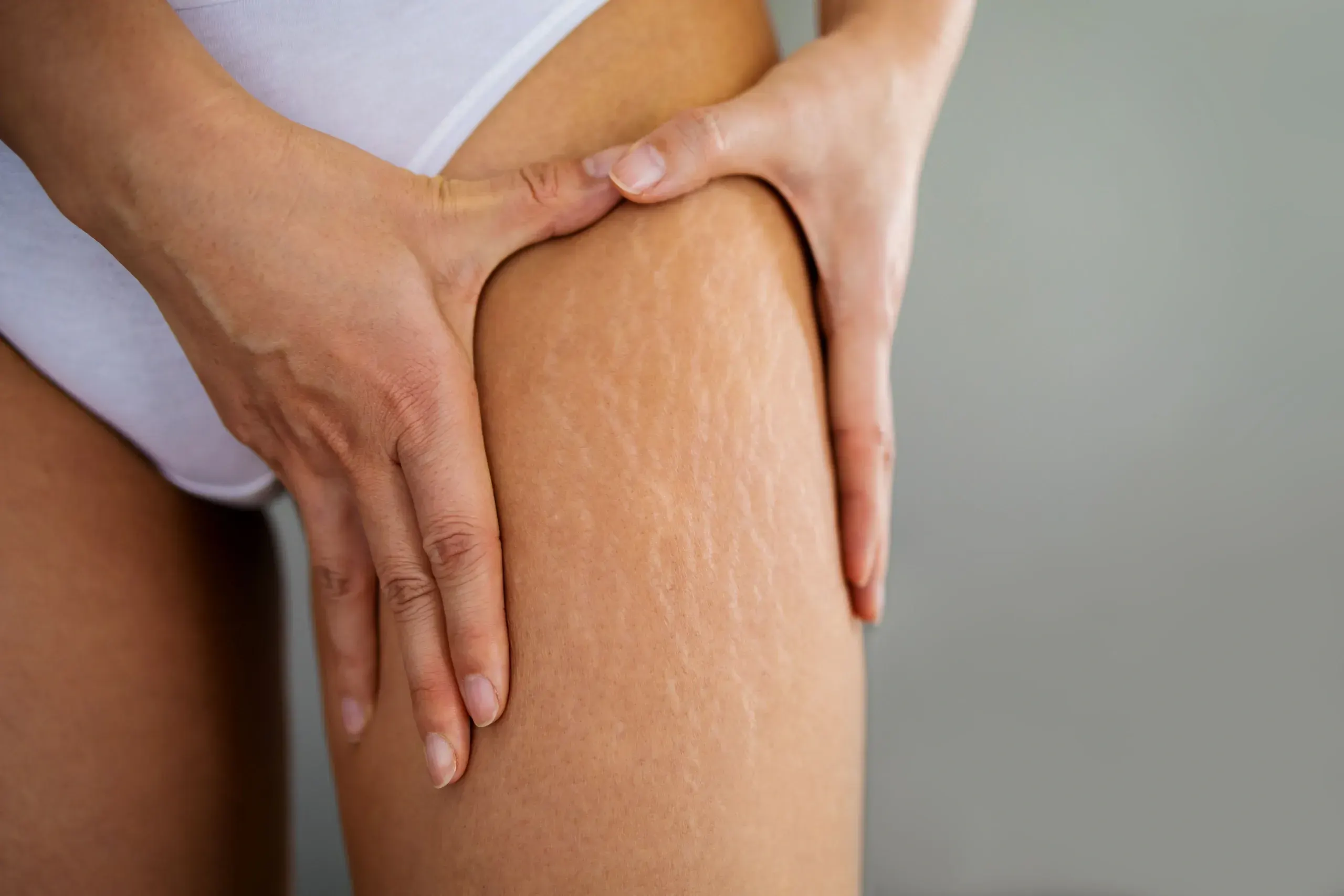
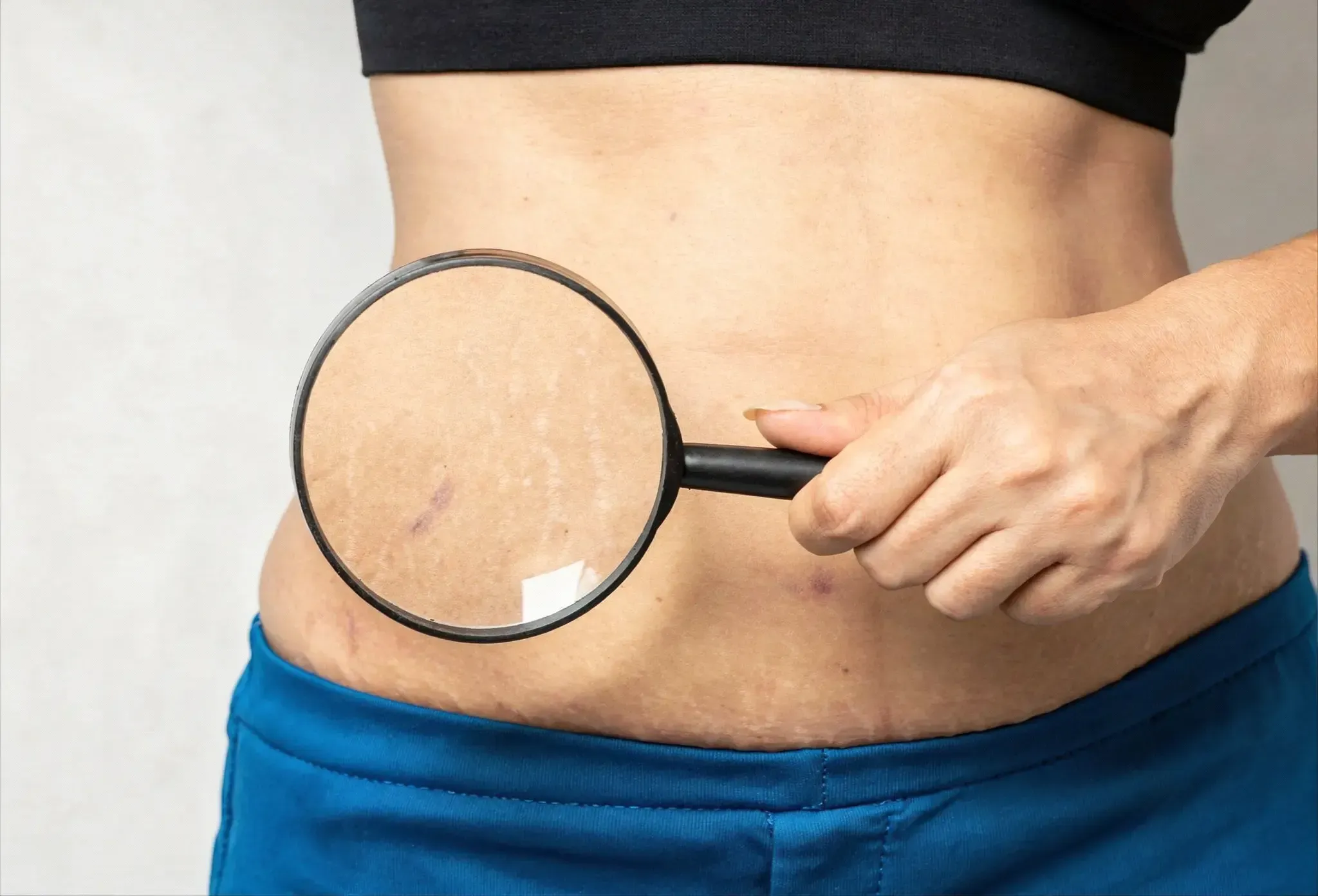
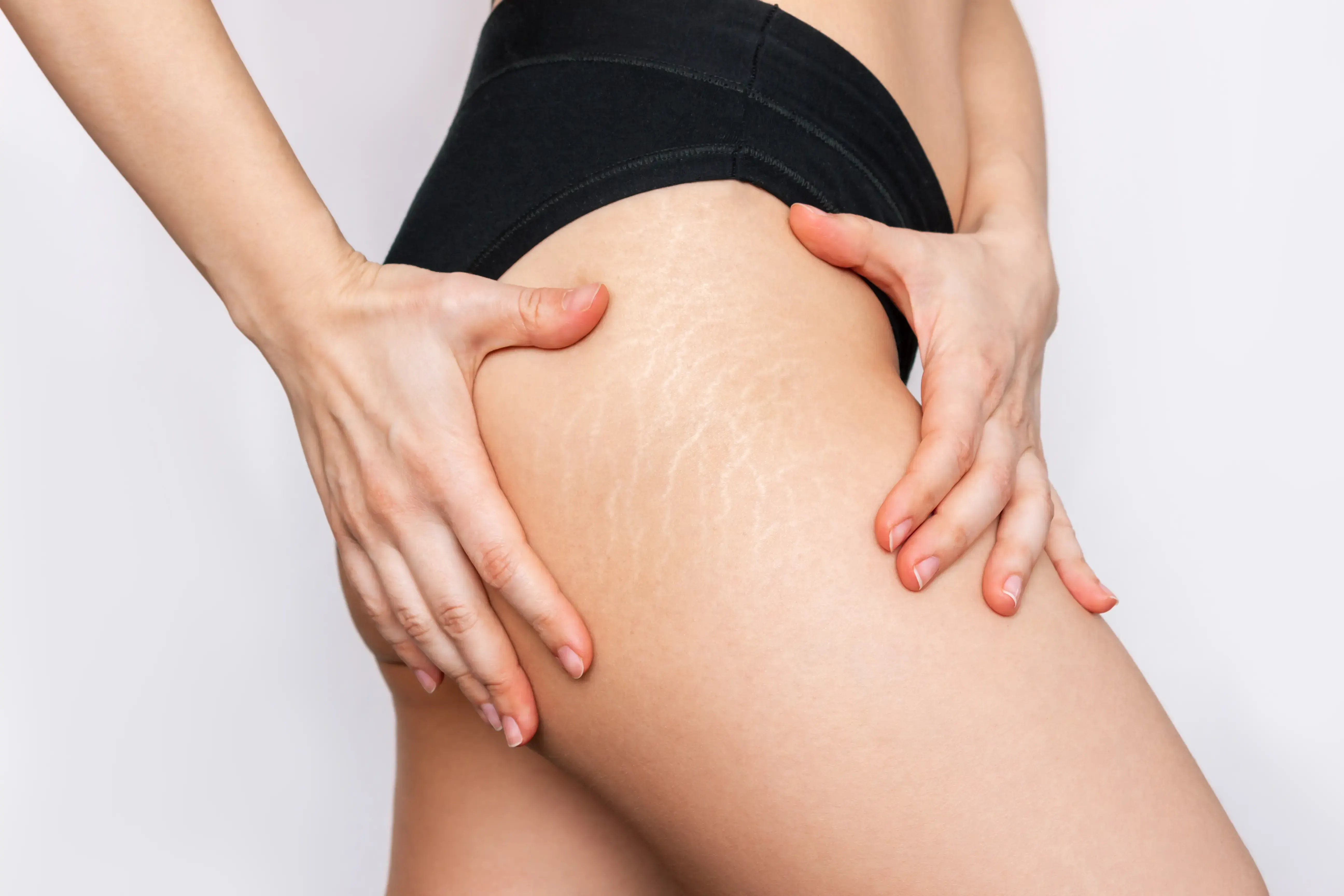
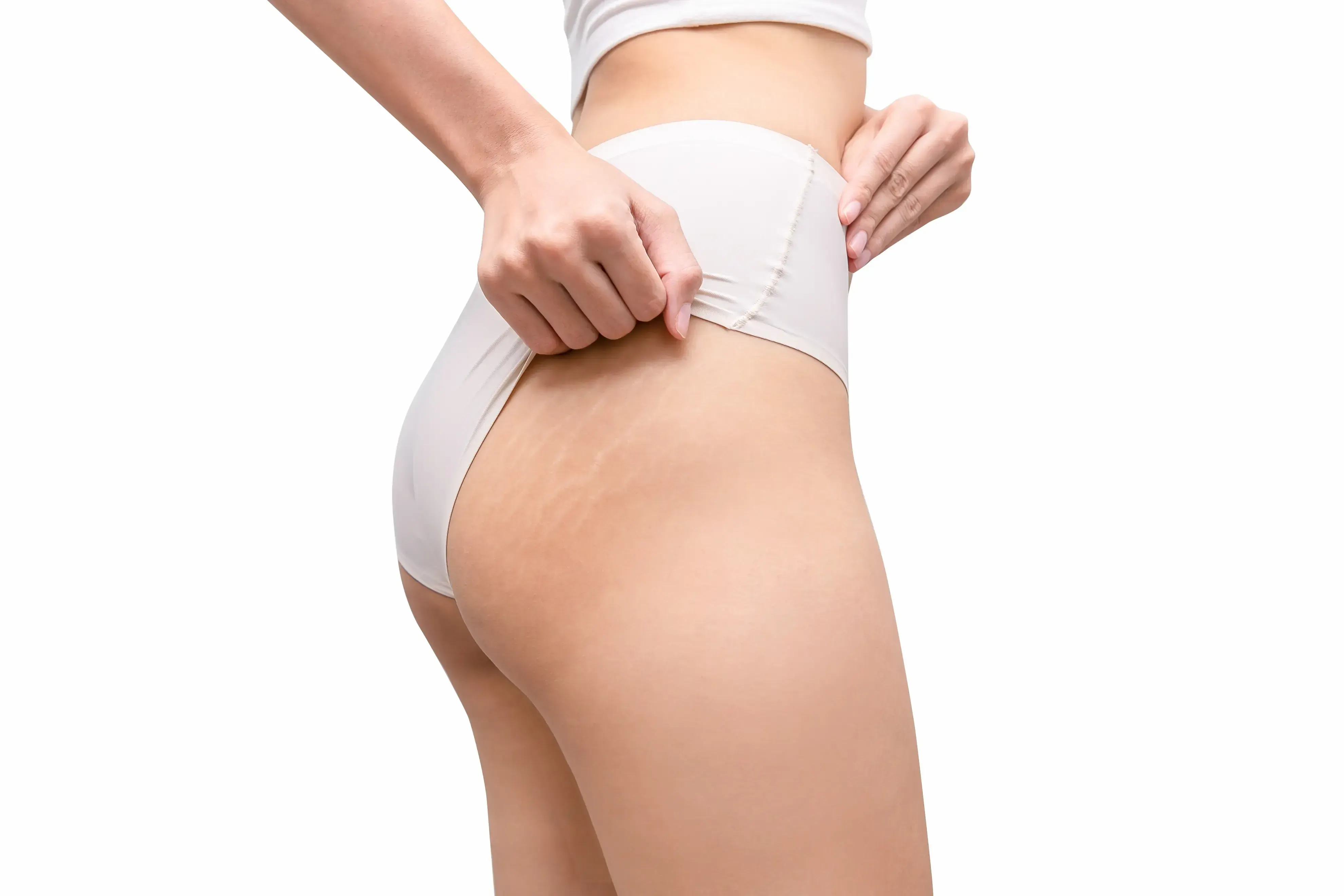
Healthy skin contains a flexible mesh of collagen and elastin in the dermis that allows it to stretch and rebound. When the skin is forced to expand rapidly, during pregnancy, a growth spurt, or fast weight gain, this protein scaffolding tears at the microscopic level. The body repairs the damage with scar tissue rather than rebuilding the original elastic network, which is why stretch marks behave like scars and not like ordinary skin.
Hormones play a central role. Cortisol, estrogen, and relaxin all rise during pregnancy and adolescence, weakening the strength of dermal fibroblasts and reducing the skin's ability to produce new collagen quickly. According to the American Academy of Dermatology, this hormonal influence explains why stretch marks are so common during pregnancy and puberty, and why some people develop them more easily than others.
The early red or purple stage (striae rubrae) reflects active inflammation and dilated capillaries within the new tear, which is also when the skin responds best to treatments like Exion RF Microneedling. Once the marks mature into white striae albae, the dermis is thinner, depigmented, and harder to remodel, though improvement is still possible with the right protocol.